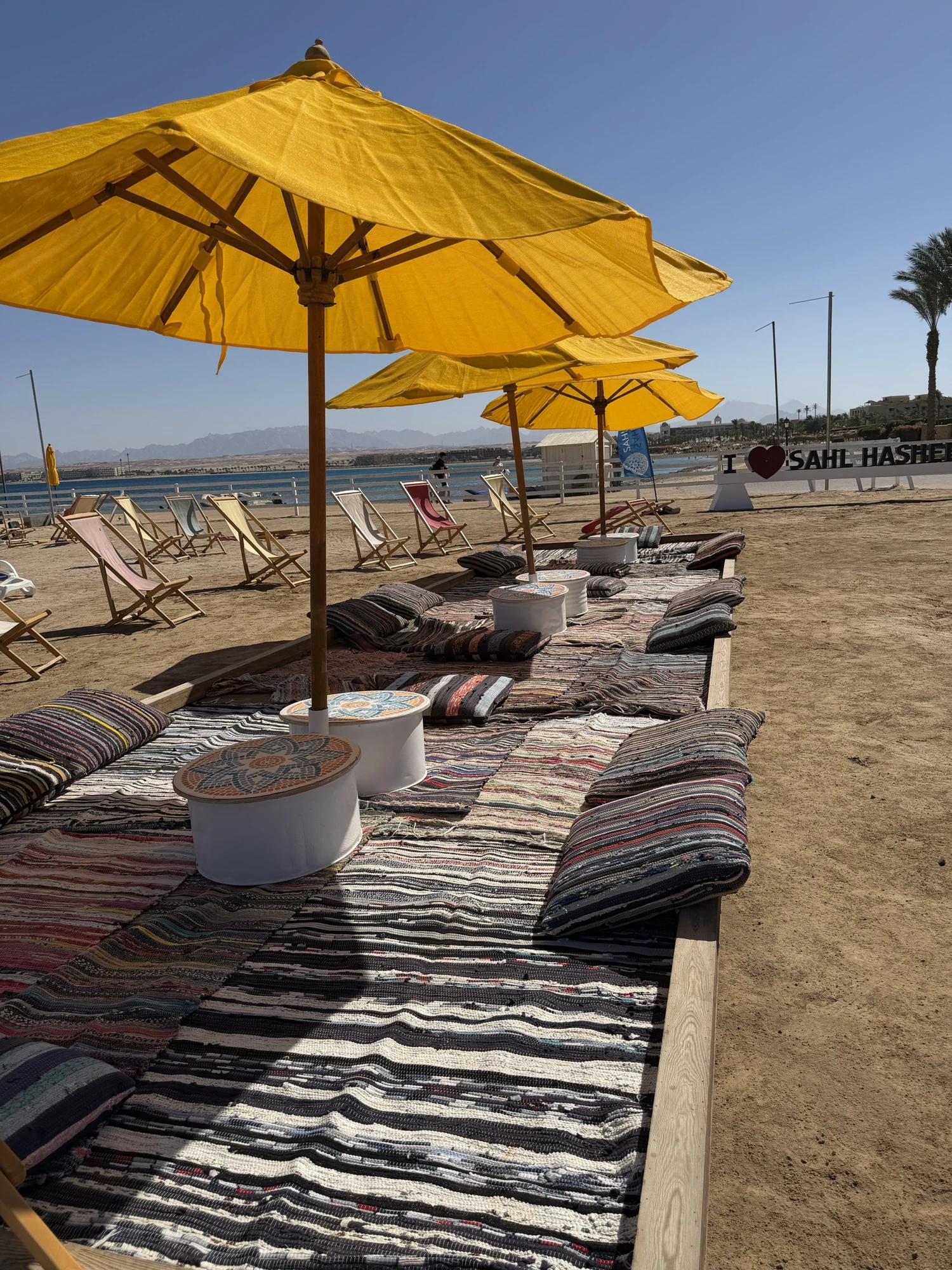
Supply is arriving on both coasts.
Egypt’s hotel pipeline reached 185 hotels and 45,984 rooms in 2026, the largest in Africa, and the country is targeting 30 million tourists a year by 2030. The head of the Egyptian Tourism Federation has said Egypt needs around 200,000 new hotel rooms to get there. The Red Sea is central to that plan: in September 2025 Emaar Misr and Citystars announced Marassi Red Sea, an EGP 900 billion development across ten million square metres, and in October 2026 the Tourism Development Authority allocated more than a million square metres south of Hurghada for new hotels and water parks.
Across the water, Saudi Arabia’s Red Sea Global has a mandate covering more than ten projects along the Kingdom’s coast, positioned around luxury and regenerative tourism, and has described Egypt as an important market. Meanwhile, operators on Egypt’s Red Sea expect winter arrivals to rise by around 20% this season.
When everyone has the sea, the sea is not the brand.
A decade ago a Red Sea location was close to a proposition in itself. With dozens of destinations now launching along both coasts, coral reefs, sunshine and a marina are the price of entry. Destinations that market only the setting will be compared on price and access, which is a difficult place to build long-term value.
Distinctive destinations start with a decision about character: a point of view on who belongs there, what life feels like and what the place stands for. That character then shapes the masterplan programme, the hospitality mix, the naming, the arrival experience and the way sales teams talk about it.
Five decisions before launch.
WAA’s destination work begins with five decisions. Each is simple to state and hard to change later, so they belong before the first visual is released.
- Who it is for. Define the primary guest and buyer, and who the destination is deliberately not designed for. A destination that welcomes everyone equally is hard to explain and easy to copy.
- What people come to do. Name the reason to visit beyond the beach: diving, wellness, family time, sport, culture or community. The reason shapes which hotels, clubs and services belong in the programme.
- What only this place has. Identify what cannot be reproduced elsewhere on the coast: a landform, a reef, a desert edge, a history or a community. Build the identity around it.
- How the experience connects. Plan the journey from first impression to departure as one story, from the arrival road and the sales gallery to wayfinding, events and everyday service.
- Who keeps it consistent. Set the governance: one platform that developers, operators, brokers and agencies all use, so the destination is described the same way by everyone who sells it.
Positioning against the other coast.
Egypt’s Red Sea and Saudi Arabia’s are often discussed as rivals, but they start from different places. Saudi Arabia’s projects are new, master-planned around luxury and regeneration, and supported by sovereign investment. Egypt’s coast has decades of established resort towns, year-round sunshine and charter routes from Europe; Enterprise reports that charter capacity is the deciding factor for Egypt’s Red Sea this winter.
Neither position is automatically stronger. What matters for an individual destination is that it chooses its place deliberately, whether that is established and accessible, new and exclusive, or something more specific, and then delivers that choice consistently.
Make the destination findable before it is visitable.
Guests and investors now research destinations through search engines and AI assistants long before they visit. A destination that publishes clear, consistent information about what it is, who it is for and what it offers, in English and Arabic and in the languages of its source markets, gives those systems something reliable to repeat. One that relies on scattered announcements and broker listings is described by others.
TAKE IT INTO YOUR NEXT CONVERSATION
Five questions before the masterplan is marketed.
Who is the destination for, and who is it not for?
What will people come to do that they cannot do further along the coast?
Which feature of this place is impossible to copy?
Does the journey from arrival to departure tell one story?
Who owns the platform every partner will use to describe the destination?
QUESTIONS ANSWERED
What people ask us.
What is destination branding?
Destination branding defines what a place stands for, who it is for and why people should choose it, then expresses that identity through naming, design, experiences, partners and communication. For new developments it starts with the masterplan programme, not with the logo.
When should destination branding start?
At concept stage, alongside the masterplan, before visuals or sales materials are released. Decisions about audience, character and programme are much harder and more expensive to change once a destination has been announced.
How is destination branding different from marketing a real estate project?
A real estate project markets units to buyers. A destination has to persuade several audiences, including guests, residents, investors, operators and partners, and keep many businesses telling one story over many years.
SOURCES
- Africa’s hotel development pipeline hits record high, led by East Africa · TradeArabia, 2026
- Egypt allocates over 1 mln sqm for projects adding 856 hotel rooms, two water parks south of Hurghada · Ahram Online, 6 October 2026
- Egypt seals massive $18.5 billion tourism project with UAE, Saudi partners · Gulf News, September 2025
- Egypt’s 30-million tourist goal: Ready or bottlenecked? · Egypt Independent, 1 October 2026
- TRSDC rebrands to Red Sea Global · Argaam, 25 October 2022
- Saudi Arabia’s gold rush · ArabAd, 5 January 2023
- Red Sea Global looks to Egypt as it expands outside KSA · Enterprise, 26 October 2023
- Red Sea hotels won’t raise their rates despite an expected 20% jump in winter arrivals · Enterprise, 1 September 2026